
May 11, 2026
Vacuum Circuit Breaker vs Air Circuit Breaker: Which One to Choose for Medium Voltage Distribution? Arc Extinguishing Principle and Lifespan Comparison
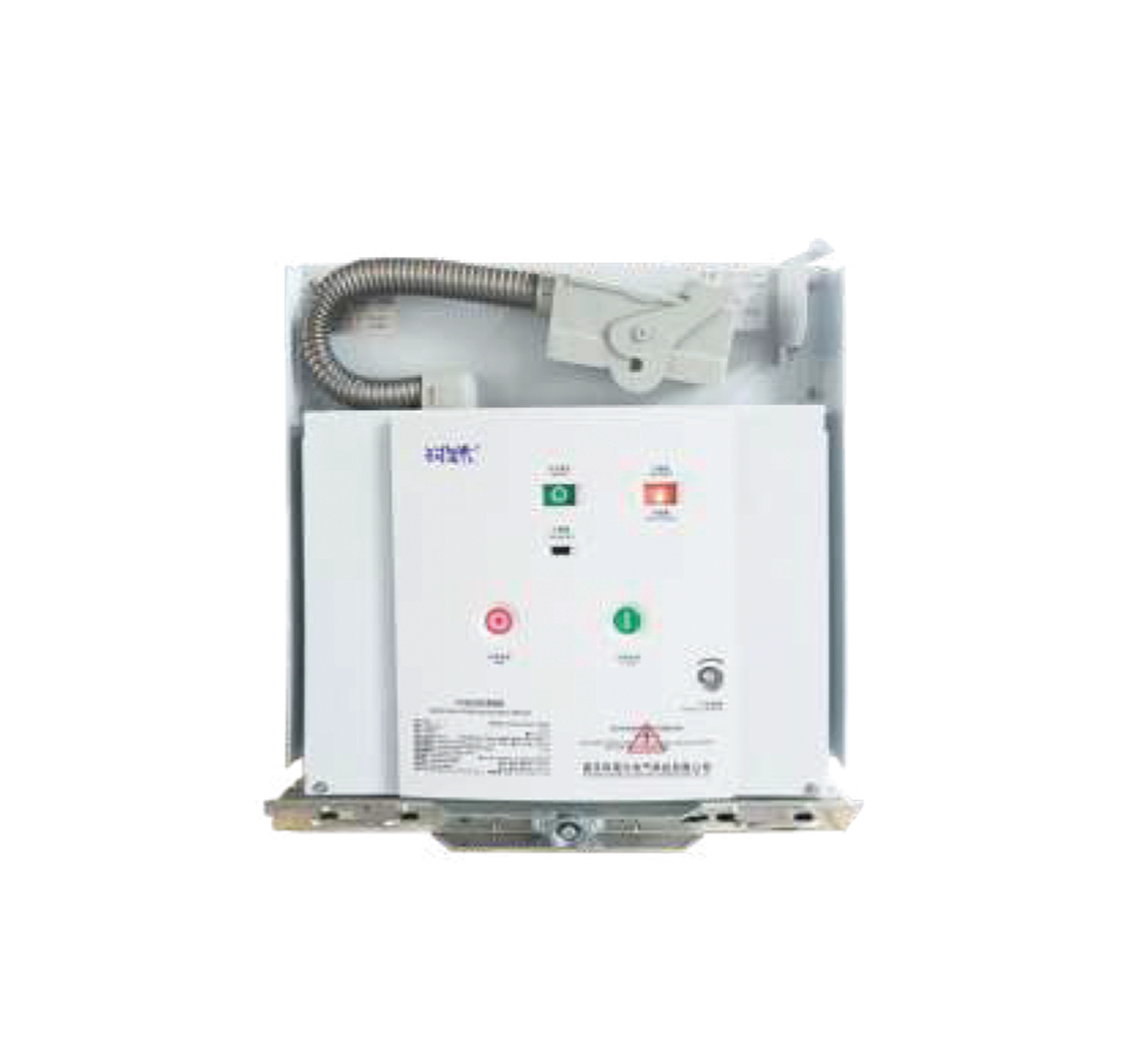
Table of Contents
1. Introduction: Circuit Breakers and the Core Role in Medium Voltage Power Distribution
2. What Are Vacuum Circuit Breakers and Air Circuit Breakers? Basic Definitions
3. Arc Quenching Principle: The Fundamental Difference Between the Two Breakers
4. Life Comparison: Vacuum Circuit Breaker vs Air Circuit Breaker (Data Supported)
5. Circuit Breaker Selection Guide for Medium Voltage Power Distribution
6. Data Comparison Table: Key Performance of Two Breakers
7. FAQ: Common Questions About Breaker Selection and Arc Quenching
Introduction: Circuit Breakers and the Core Role in Medium Voltage Power Distribution
Medium voltage power distribution is the backbone of industrial and commercial power supply, covering 3.6kV to 40.5kV, which is critical for stable power transmission and equipment protection.
Circuit breakers are the "safety valves" of medium voltage power distribution systems. They cut off fault currents in milliseconds to prevent equipment damage and power outages.
As an expert with 14 years of experience in medium voltage power distribution, I’ve found that most engineers struggle with circuit breaker selection—especially choosing between vacuum circuit breakers and air circuit breakers.
The two breakers differ greatly in arc quenching principle, service life, and performance. Choosing the wrong one can lead to frequent failures, high maintenance costs, and even affect the reliability of the entire power distribution system.
This article focuses on the core keywords: vacuum circuit breaker, air circuit breaker, medium voltage power distribution, arc quenching principle, life comparison, and circuit breaker selection. It will explain their differences, analyze the arc quenching principle and life data, and provide a practical selection guide.
What Are Vacuum Circuit Breakers and Air Circuit Breakers? Basic Definitions
First, let’s clarify the basic concepts of the two breakers, which is the basis for understanding their differences and making correct circuit breaker selection.
A vacuum circuit breaker (VCB) is a switching device that uses a high-vacuum environment (usually below 10⁻⁴ Pa) as the arc quenching medium. Its contacts are sealed in a vacuum interrupter, which is the core component.
It’s widely used in medium voltage power distribution due to its compact structure, fast arc quenching speed, and low maintenance needs. It’s especially suitable for scenarios requiring frequent operation.
An air circuit breaker (ACB) uses normal atmospheric air as the arc quenching medium. It relies on arc extinguishing grids to elongate, cool, and split the arc, forcing it to extinguish.
Traditional air circuit breakers are more common in low-voltage systems, but some improved models are also used in medium voltage power distribution, mainly in scenarios with low investment budgets.
According to the 2026 Medium Voltage Circuit Breaker Market Report, vacuum circuit breakers account for 72% of the medium voltage circuit breaker market, while air circuit breakers account for only 18%.
Arc Quenching Principle: The Fundamental Difference Between the Two Breakers
1. Arc Quenching Principle of Vacuum Circuit Breakers
The arc quenching principle of vacuum circuit breakers relies on the high insulation and arc-extinguishing performance of vacuum.
When the contacts of the vacuum circuit breaker separate, an arc is generated by the metal vapor evaporated from the contacts. Since there are almost no gas molecules in the vacuum, the charged particles in the arc diffuse rapidly.
The arc energy dissipates quickly, and the metal vapor condenses rapidly when the current crosses zero. This restores the insulation strength immediately, preventing the arc from reigniting.
The arc quenching time of vacuum circuit breakers is extremely short, usually only half a cycle (about 10ms), which is much faster than air circuit breakers.
This fast arc quenching speed ensures that the vacuum circuit breaker can cut off fault currents quickly, reducing damage to the power distribution system.
2. Arc Quenching Principle of Air Circuit Breakers
Air circuit breakers use atmospheric air as the arc quenching medium, and their arc quenching principle is relatively simple but less efficient.
When the contacts separate, the arc is drawn into the arc extinguishing grid by the electromagnetic force. The grid splits the long arc into multiple short arcs.
The voltage drop of each short arc superimposes to exceed the power supply voltage, and the air cools the arc at the same time, forcing the arc to extinguish gradually.
The arc quenching time of air circuit breakers is about 2-3 cycles (40-60ms), which is much longer than that of vacuum circuit breakers.
In addition, the arc quenching effect of air circuit breakers is easily affected by the environment, such as humidity and dust, which can reduce their arc quenching performance.
Life Comparison: Vacuum Circuit Breaker vs Air Circuit Breaker (Data Supported)
Service life is a key factor in circuit breaker selection, as it directly affects the long-term operation cost and reliability of medium voltage power distribution systems.
The service life of circuit breakers is mainly divided into mechanical life and electrical life, and there is a huge gap between vacuum circuit breakers and air circuit breakers.
The mechanical life of vacuum circuit breakers is usually 100,000-300,000 operations. The vacuum interrupter is sealed tightly, with no easy-to-wear parts, so the mechanical wear is very small.
Their electrical life is 30,000-50,000 breaking cycles (full capacity), which can meet the needs of frequent switching in medium voltage power distribution systems.
In contrast, the mechanical life of air circuit breakers is only 10,000-50,000 operations. The arc extinguishing grid is easily burned by the arc, and the mechanical structure is more complex, leading to faster wear.
The electrical life of air circuit breakers is 5,000-10,000 breaking cycles, which is far lower than that of vacuum circuit breakers.
According to field operation data, the average service life of vacuum circuit breakers in medium voltage power distribution is 20-25 years, while that of air circuit breakers is only 8-12 years.
Circuit Breaker Selection Guide for Medium Voltage Power Distribution
Circuit breaker selection for medium voltage power distribution is not about choosing the "best" one, but the most suitable one according to actual needs. Here are the key selection principles based on my years of experience.
First, consider the arc quenching performance. If the power distribution system requires fast fault handling (such as industrial workshops, data centers), vacuum circuit breakers are the first choice.
Their fast arc quenching speed can minimize the impact of faults. For scenarios with low requirements on fault handling speed and limited budget, air circuit breakers can be considered.
Second, consider the operation frequency. If the breaker needs to be switched frequently (such as switching capacitors, motors), vacuum circuit breakers are more suitable due to their long mechanical and electrical life.
Air circuit breakers are not suitable for frequent operation, as this will greatly shorten their service life.
Third, consider the environmental conditions. Vacuum circuit breakers have strong environmental adaptability, and can work stably in humid, dusty, and high-temperature environments.
Air circuit breakers are sensitive to the environment; humidity and dust will affect their arc quenching effect and insulation performance, so they are more suitable for clean and dry indoor environments.
Finally, consider the long-term cost. Although the initial investment of vacuum circuit breakers is 30%-50% higher than that of air circuit breakers, their long service life and low maintenance cost can save more money in the long run.
Data Comparison Table: Key Performance of Two Breakers
To intuitively show the differences between vacuum circuit breakers and air circuit breakers in medium voltage power distribution, the following table compares their key performance indicators, with data verified by authoritative industry reports.
Performance Indicator | Vacuum Circuit Breaker (VCB) | Air Circuit Breaker (ACB) | Difference Analysis |
Arc Quenching Medium | High vacuum (≤10⁻⁴ Pa) | Atmospheric air | VCB’s medium has better insulation and arc-extinguishing performance |
Arc Quenching Time | ~10ms (0.5 cycles) | 40-60ms (2-3 cycles) | VCB is 4-6 times faster than ACB |
Mechanical Life | 100,000-300,000 operations | 10,000-50,000 operations | VCB’s mechanical life is 2-6 times longer |
Electrical Life (Full Capacity) | 30,000-50,000 breaking cycles | 5,000-10,000 breaking cycles | VCB’s electrical life is 3-5 times longer |
Average Service Life | 20-25 years | 8-12 years | VCB’s service life is more than twice that of ACB |
Initial Investment | 30%-50% higher than ACB | Lower cost | ACB has an advantage in initial investment |
Maintenance Cost (Annual) | 100-200 US dollars | 500-800 US dollars | VCB’s maintenance cost is 70% lower |
Environmental Adaptability | Strong (resistant to humidity, dust, high temperature) | Weak (requires clean, dry environment) | VCB is more suitable for harsh environments |
FAQ: Common Questions About Breaker Selection and Arc Quenching
Q1: In medium voltage power distribution, can air circuit breakers completely replace vacuum circuit breakers?
No, they can’t. Air circuit breakers have obvious shortcomings in arc quenching speed and service life.
They are only suitable for scenarios with low requirements on fault handling speed, infrequent operation, and limited budget.
For most medium voltage power distribution scenarios (such as industrial parks, commercial buildings), vacuum circuit breakers are more reliable and cost-effective in the long run.
Q2: What factors will affect the arc quenching effect of vacuum circuit breakers?
The main factors are the vacuum degree of the vacuum interrupter and the material of the contacts.
If the vacuum degree decreases (such as seal damage), the arc quenching performance will be significantly reduced. The contact material (usually copper-tungsten alloy) affects the arc generation and extinction speed.
Regular inspection of the vacuum interrupter is necessary to ensure its arc quenching effect.
Q3: Is the maintenance of vacuum circuit breakers more complicated than air circuit breakers?
No, it’s simpler. Vacuum circuit breakers have a compact structure and no easily worn parts like arc extinguishing grids.
Daily maintenance only needs to check the contact status and vacuum degree, which can be done every 1-2 years.
Air circuit breakers need to regularly replace the arc extinguishing grid and check the mechanical structure, with a maintenance cycle of 3-6 months.
Q4: When selecting circuit breakers for medium voltage power distribution, should we only consider the service life?
No, service life is an important factor, but not the only one.
We also need to consider the arc quenching performance, operation frequency, environmental conditions, initial investment, and maintenance cost.
For example, in a humid industrial workshop, even if the air circuit breaker is cheaper, the vacuum circuit breaker is more suitable because of its strong environmental adaptability.