
November 6, 2026
MNS Low Voltage Withdrawable Switchgear Supplier Evaluation: Specifications, Type Tests, and Export Packaging
Start with the project load profile, not the catalog
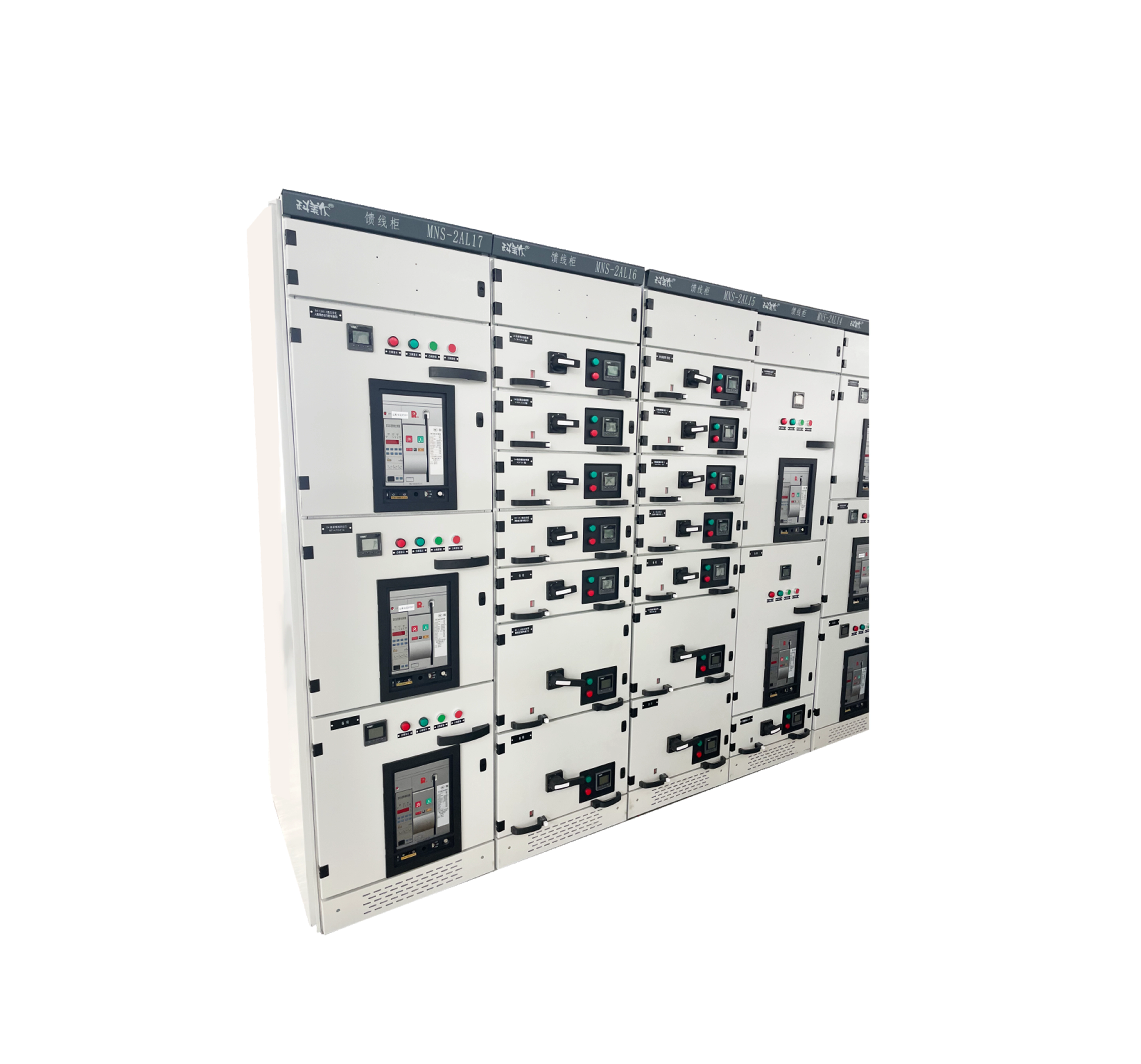
MNS low voltage withdrawable switchgear is modular distribution equipment built around a 25 mm module (E = 25 mm), with drawer units that can be inserted or removed without interrupting adjacent circuits. Suppliers often quote a current range such as 1600A to 4000A, but the right configuration depends on your actual load profile, fault level, and site conditions. Before comparing suppliers, define the main busbar rating, short-circuit withstand requirement, protection degree, and drawer mix your project needs. That baseline lets you test whether a supplier’s offer is technically responsive or simply a generic datasheet.
The 4000A–1600A range covers medium-capacity industrial and commercial distribution. Smaller projects may fit a 1600A–400A range, while large plants or data centers may need 4000A–6300A. The evaluation criteria below apply across these ranges, but the specification questions change with capacity.
Specification trade-offs that affect total cost
Price comparisons between MNS switchgear suppliers are only meaningful when the technical scope is identical. Four trade-offs usually drive both capital cost and lifecycle cost.
Busbar current versus future expansion
A 1600A main busbar may serve today’s loads with margin, but adding a production line or EV charging bank can push it to its limit. Specifying 4000A from the start costs more in copper and frame size; retrofitting later can mean replacing the incoming section and re-certifying the assembly. Ask suppliers to state the main busbar rating, the rated current of each vertical section, and the assumed diversity factor. If the project has a phased build-out, request a busbar sizing calculation rather than accepting a rule-of-thumb number.
Drawer unit mix and module size
MNS drawers are available in 8E, 4E, 2E, and 1E sizes. A higher proportion of small modules increases circuit density but can complicate cable access and heat dissipation. Large modules (8E) suit motor starters or high-current feeders; 1E and 2E modules suit control and small distribution circuits. Suppliers should provide a single-line diagram with drawer allocation, not just a total number of outgoing ways. Check that the proposed mix leaves spare capacity and that spare drawers are the same size as the most likely future additions.
Protection degree and environmental conditions
Standard MNS assemblies are often offered at IP30 or IP40, with IP54 available as an option. Higher IP ratings reduce dust and water ingress but can trap heat, requiring derating or additional ventilation. For indoor electrical rooms, IP30–IP40 is common; for dusty or humid industrial areas, IP54 may be justified. Ask for the protection degree of the complete assembly, not just the enclosure, and confirm whether the rating applies with doors open or closed during maintenance. Also check the ambient temperature and altitude assumptions used for the rating.
Intelligent monitoring and communications
Optional monitoring units and Modbus or Profibus interfaces add cost and complexity. Decide whether you need remote monitoring at the circuit level or only at the incoming section. Ask which protocols are native, which require gateways, and whether the monitoring system is supplied by the switchgear maker or a third party. A clear answer here prevents integration surprises during commissioning.
Type test documentation: what to request and how to read it
Type tests demonstrate that a design has passed defined tests, usually to IEC 61439 or an equivalent standard such as GB/T 7251. They are not the same as routine factory tests on your specific units. For MNS switchgear, request the type test reports that cover the exact configuration you are buying: busbar rating, short-circuit withstand current, protection degree, and drawer arrangement.
Suppliers may reference GB7251 or GB/T 7251.2-2023. These are Chinese standards; if your project requires IEC 61439, confirm that the test reports are to the IEC edition and that the testing laboratory is recognized in your market. A report for a 1600A assembly does not automatically cover a 4000A assembly, and a report for a fixed-mounted version does not cover a withdrawable version.
Checklist for type test reports
Scope: Does the report name the model, rated current, short-circuit withstand current, and protection degree?
Configuration: Does it match your drawer mix and busbar arrangement?
Standard and edition: Is it IEC 61439-1/-2, GB/T 7251.2-2023, or another standard? Is the edition current?
Laboratory: Is the test laboratory accredited or recognized by your project authority?
Date and validity: When was the test performed? Has the design changed since?
Language: Is a certified English translation available?
If a supplier cannot provide a report for your exact configuration, ask whether a design verification or a new type test is possible, and who bears the cost and lead time. Treat verbal assurances of “full type test” as unverified until you see the document.
Export packaging and shipping checks
Switchgear is heavy, fragile in transit, and sensitive to moisture. Packaging failures show up as bent frames, cracked insulators, or corroded busbars after a long sea voyage. Before shipment, agree on a packaging specification and arrange a pre-shipment inspection.
What to specify in the packaging plan
Seaworthy packing: Export-grade plywood or steel-framed crates, with internal bracing to prevent movement.
Moisture control: Desiccant bags and sealed barrier bags for sensitive components; consider VCI film for long voyages.
Shock and tilt indicators: Attach indicators to each crate and record their status at loading and unloading.
Lifting and handling marks: Clear center-of-gravity and lifting-point markings on the crate.
Documentation: Packing list,装箱单, and a photo record of each crate before closing.
Ask the supplier to provide the packing drawing and crate dimensions before production, so you can check container loading and inland transport clearances. For drawer-type switchgear, confirm that drawers are secured or removed for shipment and that busbar connections are protected against vibration.
Pre-shipment inspection points
Arrange a third-party inspection or a detailed photo report covering: nameplate data, busbar torque marks, drawer operation, insulation resistance, and packaging condition. If the supplier resists inspection, treat that as a warning sign. Also confirm the Incoterms and who is responsible for insurance and customs documentation.
Supplier comparison table
Evaluation area | What to request | Red flag |
|---|---|---|
Current rating and busbar | Main busbar rating, section ratings, diversity calculation | Only a generic “up to 4000A” statement without section data |
Drawer configuration | Single-line diagram with module sizes and spare capacity | Total outgoing ways quoted without drawer sizes |
Type test evidence | Report matching your configuration, standard, and laboratory | “Full type test” claim with no document |
Protection degree | IP rating of complete assembly and test conditions | IP54 claimed without derating or thermal data |
Packaging | Packing drawing, crate dimensions, moisture control | No pre-shipment photo record or inspection allowed |
Questions to ask before awarding the order
Use these questions to separate responsive suppliers from those who only trade on price:
Can you provide a type test report for the exact current rating and drawer configuration we specified?
What is the short-circuit withstand current of the main busbar and the vertical sections?
How do you calculate derating for ambient temperature and altitude at our site?
Which components are manufactured in-house and which are sourced from third parties?
What is your standard packaging for sea freight, and can we inspect before shipment?
What documentation will be supplied in English, and in what format?
Record the answers in your evaluation matrix. A supplier who answers precisely and provides documents is lower risk than one who offers a lower price with vague assurances.
When to consider a different capacity range
The MNS platform spans 400A to 6300A, but not every supplier offers every range. If your project needs 4000A–6300A for a large plant or data center, confirm that the supplier has type-tested assemblies at that rating. For small and medium projects, a 1600A–400A range may be more cost-effective, but check that the smaller frame still accepts the drawer sizes you need. Do not assume that a supplier’s 1600A catalog extends to 4000A without separate test evidence.
Next steps for your evaluation
Build a requirements sheet with busbar rating, short-circuit withstand, protection degree, drawer mix, and documentation language. Send it to at least three suppliers and ask for a clause-by-clause response. Request type test reports and a packaging drawing with the quotation. Then compare total landed cost, including inspection and potential rework, rather than unit price alone. For MNS switchgear in the 4000A–1600A range, coumelelectric.com provides product information and inquiry support; use the criteria above to verify any supplier’s offer against your project requirements.