
October 14, 2026
Prefabricated Substation Market 2026: Renewable Demand Drives Global Growth, New Standards Reshape Procurement
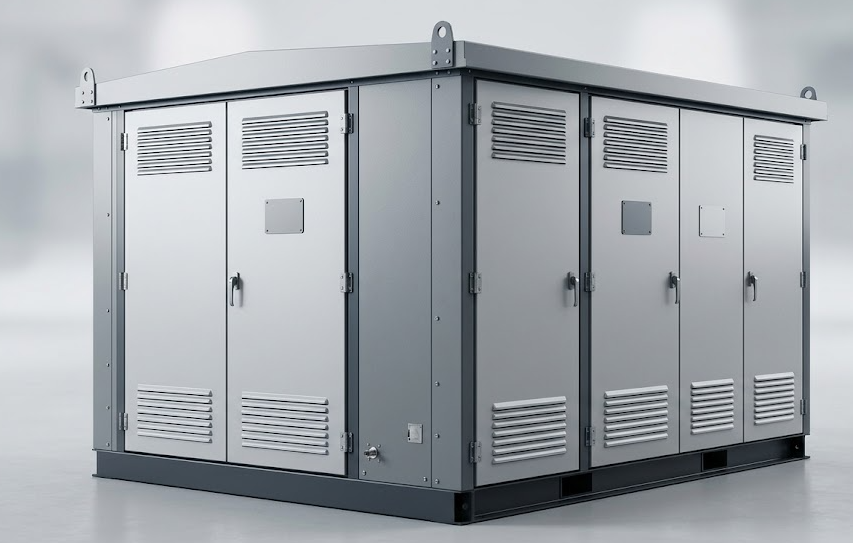
Global demand for prefabricated substations keeps rising as utilities, renewable developers and industrial operators move away from slow, labour intensive on site substation construction. Factory built, fully tested prefabricated substation units cut site work, shorten project timelines and fit tight space urban or remote renewable sites. New market data shows steady expansion across North America, Europe, Asia Pacific, Middle East Africa and Latin America, with renewables integration as the single largest growth trigger in 2026.
Global Market Size & Key Statistics
The worldwide prefabricated substation market is estimated at USD 21.89 billion for 2026, forecast to hit USD 33.64 billion by 2032 at a compound annual growth rate (CAGR) of 7.42%.
Metric | Value |
2026 Global Market Size | USD 21.89 Billion |
2032 Forecast Market Size | USD 33.64 Billion |
CAGR (2026 2032) | 7.42% |
Typical time saving vs conventional build | 40 60% shorter installation & commissioning |
Share of demand linked to renewables (solar, wind, BESS) | ~41% of new global deployments |
Source: Verified Market Reports, 2026 global aggregated industry dataset
Asia Pacific holds the largest regional market share, supported by massive solar wind build out in India, Southeast Asia and grid upgrade programs. Europe follows, pushed by SF6 free switchgear regulatory updates and urban grid modernization. North America sees strong uptake from data centre power needs and grid resilience investments. Middle East & Africa and Latin America register fast growth for mining sites and rural electrification projects.
Major Growth Drivers for Prefabricated Substation Adoption
1. Renewable Energy and Battery Storage Integration
Solar farms, onshore wind parks and battery energy storage systems (BESS) are the top end users for modern prefabricated substation solutions. Traditional on site substations often take 12 18 months to finish. Prefabricated units can be delivered and commissioned within 6 9 months, helping developers meet tight grid connection deadlines.
Around 41 % of all new prefabricated substation orders globally tie directly to renewable power plants, and BESS related interconnection projects contribute an extra 17 % share of total market demand. For medium scale solar projects, prefabricated substations from 630 kVA up to 2500 kVA have become industry standard specifications worldwide.
2. Urbanisation and Space Constrained Grid Upgrades
Many major cities lack large land plots for traditional open air substations. Compact prefabricated substation designs reduce footprint by 30 50 % compared with conventional equivalents, making them suitable for city distribution networks, commercial districts and transport infrastructure such as railways and metro systems.
3. Shortage of On Site Skilled Labour
Many regions face shortages of qualified high voltage field installation crews. Most assembly, wiring and full type testing work happens inside controlled factory facilities. On site work reduces mainly to foundation placement, unit positioning and grid connection. This lowers risk of human error and improves overall site safety.
4. Digital Smart Grid Compatibility
Modern prefabricated substations support IEC 61850 communication standards, integrating IoT sensors, remote monitoring and predictive maintenance functions. Utilities gain real time operational data, faster fault detection and lower long term maintenance costs. Existing ageing substations across North America and Europe also create retrofitting opportunities for modular prefabricated upgrade packages.
Industry Challenges Holding Back Market Expansion
Even with positive growth forecasts, the global prefabricated substation sector faces clear headwinds in 2026.
First, higher upfront capital expenditure. Factory integrated, pre tested modular units carry higher initial purchase costs. Around 31 % of surveyed utility buyers point to budget limits slowing deployment, especially in price sensitive emerging market regions. However total lifecycle costs usually turn favourable over 8 12 years of operation, thanks to less site labour and fewer construction delays.
Second, global supply chain volatility. Key components including high voltage switchgear, transformers and protection relays are exposed to copper and aluminium raw material price swings. Geopolitical risks can extend component lead times and push project schedules backward for large orders.
Third, fragmented regional certification rules. Standards and permitting requirements differ widely across countries. IEC 62271 202 sets global safety benchmarks, yet local modification and re certification are often mandatory for cross border projects, raising engineering overhead for exporters and EPC contractors.
Fourth, transport limits for oversized units. For remote inland sites, moving large container style prefabricated substations creates logistical constraints. Some project teams choose split module designs to simplify over road shipping at the cost of limited extra on site assembly work.
2026 Key Industry Trends
SF6 Free Equipment Mandates in Europe
Starting January 2026, EU regulation restricts SF6 usage for new medium voltage switchgear up to 24 kV. This policy pushes manufacturers to redesign prefabricated substation enclosures around eco friendly gas or vacuum interruption technology. Similar regulatory discussions are ongoing across other regions, and this will gradually reshape global product specifications through 2032.
Mobile & Skid Mounted Prefabricated Substation Niche Growth
Temporary power for mining, disaster recovery grid restoration and short term construction sites fuels demand for skid mounted or trailer mounted prefabricated substation variants. These movable solutions allow re deployment across multiple project locations and attract growing interest from rental model power service companies.
Hybrid Pre Designed Plus Customised Models
Buyers balance cost control against site specific grid conditions. Vendors increasingly offer semi standardised base prefabricated substation platforms, with limited customisation for voltage ratings, protection schemes and environmental enclosure requirements, instead of fully one off custom builds. This approach helps shorten lead times while matching local grid codes.
Frequently Asked Questions (FAQ)
Q: What is the core difference between prefabricated substation and conventional substation? A: Prefabricated substations complete assembly, wiring and factory testing off site. Conventional substations build almost everything on location. Prefabricated options deliver faster commissioning, better repeatable quality and smaller land footprint, but have higher upfront purchase price.
Q: Which projects are best suited for prefabricated substation deployment? A: Solar & wind farms, battery storage facilities, urban distribution networks, industrial parks, mining sites and data centre power supply are ideal use cases. For extra high voltage levels above 220 kV, conventional site built substations still dominate most global projects.
Q: Which standards apply for global prefabricated substation procurement? A: Primary international references include IEC 62271 202 for compact substation safety and arc resistance, plus IEC 61850 for digital substation communication. Local national standards and grid operator technical rules always require verification for each target country before order placement.
Q: How much time can prefabricated substation save for renewable projects? A: On average prefabricated solutions cut total project execution time by 40 60 %. Many renewable projects finish grid connection within 6 9 months versus 12 18 months for traditional site constructed substations.