
May 11, 2026
The modular revolution of drawer-type distribution cabinets: Faulty drawers can be replaced in 5 minutes, reducing production losses to zero
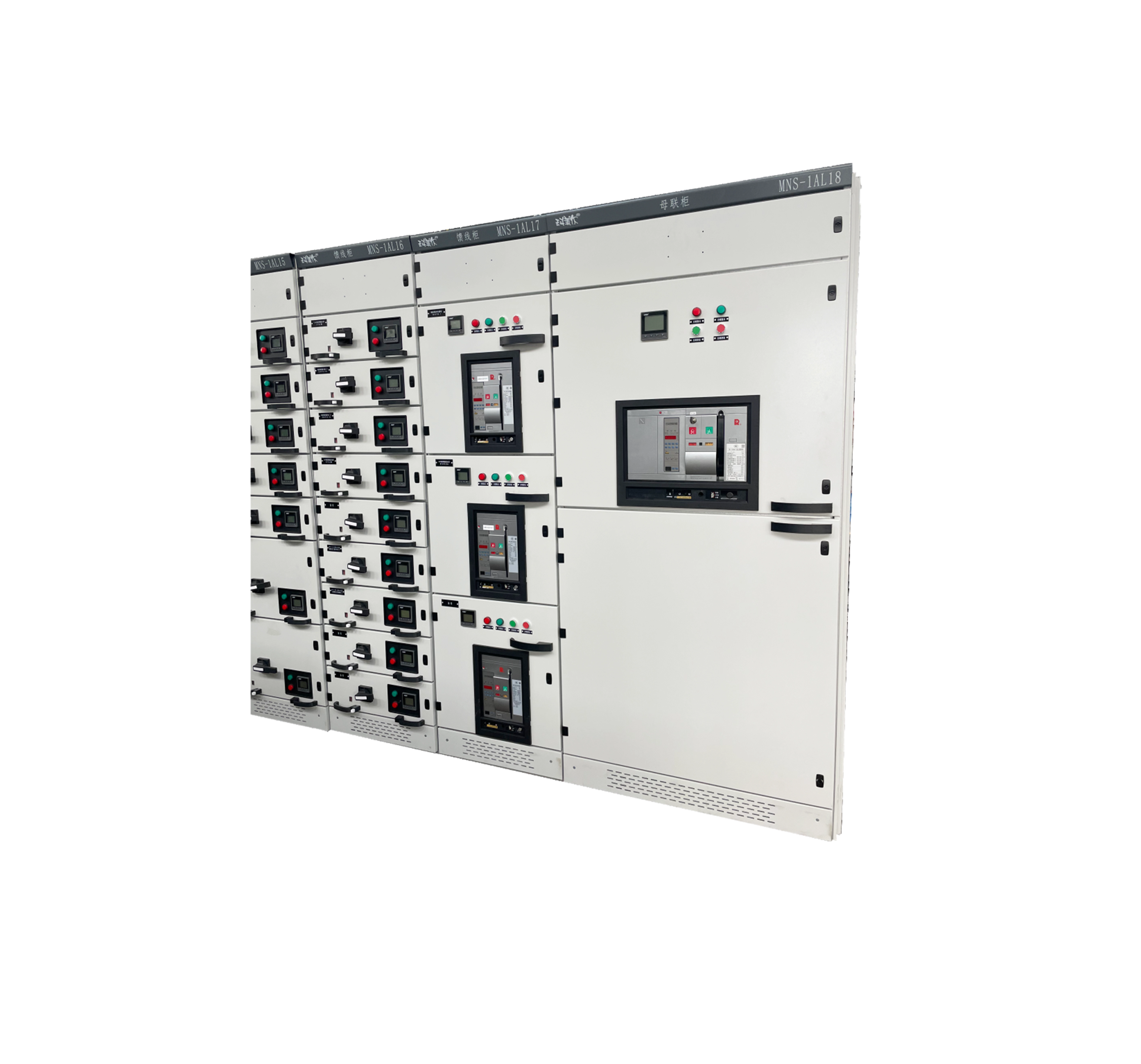
Table of Contents
1. Introduction: The Hidden Cost of Downtime in Industrial Power Distribution
2. Key Concepts: Drawer-Type Distribution Cabinet and Modular Design Core
3. Modular Design: The Foundation of Easy Maintenance and Fast Fault Replacement
4. Fault Replacement in 5 Minutes: How to Eliminate Production Downtime Loss
5. Data Comparison: Drawer-Type vs Traditional Fixed Distribution Cabinets
6. Practical Application Scenarios and Industry Value
7. FAQ: Common Questions About Drawer-Type Distribution Cabinets
1. Introduction: The Hidden Cost of Downtime in Industrial Power Distribution
In industrial production, stable power supply is the lifeline of the entire production line. The distribution cabinet, as the core equipment of power distribution, directly affects the continuity of production.
Traditional fixed distribution cabinets have been used for many years, but their maintenance is cumbersome and fault handling is slow. Once a fault occurs, the entire power supply loop must be shut down for maintenance.
According to industry statistics, the average downtime of traditional distribution cabinets due to faults is 4-6 hours. For manufacturing enterprises, every hour of downtime can cause huge production downtime losses.
The emergence of drawer-type distribution cabinets has changed this situation. Relying on modular design, it can realize fast fault replacement and convenient maintenance, even reducing the fault handling time to 5 minutes.
As an expert with more than 12 years of experience in the power distribution industry, I will break down the core advantages of drawer-type distribution cabinets, focus on how modular design achieves fast fault replacement, and compare it with traditional cabinets with real data.
2. Key Concepts: Drawer-Type Distribution Cabinet and Modular Design Core
2.1 Drawer-Type Distribution Cabinet
A drawer-type distribution cabinet is a modular power distribution device that divides the power distribution loop into independent drawer units. Each drawer unit corresponds to a separate power supply loop.
It integrates circuit breakers, contactors, and other components into each drawer, which can be freely pulled out and inserted. This design makes fault handling and maintenance more flexible.
Compared with traditional fixed distribution cabinets, it has obvious advantages in maintenance convenience and fault response speed, and is widely used in factories, data centers, and commercial complexes.
2.2 Modular Design and Its Core Value
Modular design is the core technology of drawer-type distribution cabinets. It divides the entire distribution cabinet into standardized, interchangeable drawer modules.
Each module has a unified size and interface, which can be freely combined and replaced. This not only simplifies the production process but also lays a foundation for convenient maintenance and fast fault replacement.
The modular design also allows enterprises to add or reduce drawer units according to actual power demand, avoiding the waste caused by overall replacement of traditional cabinets.
2.3 Core Advantages: Fault Replacement and Convenient Maintenance
Fault replacement is one of the most prominent advantages of drawer-type distribution cabinets. When a certain loop fails, only the faulty drawer needs to be replaced, without affecting other loops.
Convenient maintenance is also derived from the modular design. The drawer can be pulled out directly for inspection and maintenance, without disassembling the entire cabinet, which greatly reduces maintenance time and labor intensity.
These two advantages together help enterprises reduce production downtime losses and improve production efficiency.
3. Modular Design: The Foundation of Easy Maintenance and Fast Fault Replacement
3.1 Standardized Modules Ensure Interchangeability
The drawer modules of drawer-type distribution cabinets adopt standardized design, including size, interface, and component layout. This ensures that any drawer of the same specification can be interchangeable.
For example, a 8E standard drawer module can be used in any drawer-type distribution cabinet that supports 8E specifications. This interchangeability makes fault replacement more convenient and fast.
It also reduces the difficulty of spare parts management. Enterprises only need to reserve a small number of standard drawer modules, instead of preparing a variety of spare parts for different loops.
3.2 Independent Drawer Units Isolate Faults
Each drawer unit of the drawer-type distribution cabinet is an independent power supply loop, which is isolated from other units. When a fault occurs in one drawer, other drawers can still work normally.
This is completely different from traditional fixed distribution cabinets. Traditional cabinets need to shut down the entire power supply when a fault occurs, which will cause the entire production line to stop.
The independent isolation design of drawer units fundamentally reduces the scope of power outages and lays the foundation for zero production downtime loss.
3.3 Simplified Maintenance Process Reduces Labor Costs
The modular design makes the maintenance of drawer-type distribution cabinets extremely convenient. Maintenance personnel only need to pull out the faulty drawer, inspect and repair it, or directly replace it with a spare drawer.
There is no need to disassemble the entire cabinet or rewire, which greatly reduces the technical requirements for maintenance personnel.
According to industry data, the maintenance time of drawer-type distribution cabinets is 80% shorter than that of traditional fixed cabinets, and the labor cost is reduced by 60%.
4. Fault Replacement in 5 Minutes: How to Eliminate Production Downtime Loss
4.1 The Whole Process of Fast Fault Replacement
The fast fault replacement of drawer-type distribution cabinets is not an empty slogan. It has a complete and mature operation process, which can really achieve replacement in 5 minutes.
First, the fault loop is identified through the monitoring system, which takes about 1 minute. Then, the maintenance personnel pull out the faulty drawer, which takes about 1-2 minutes.
Finally, insert the spare drawer and reset it, which takes about 2 minutes. The whole process takes no more than 5 minutes, and the power supply of the loop can be restored.
4.2 Why Traditional Cabinets Cannot Achieve Fast Replacement
Traditional fixed distribution cabinets integrate all components in one cabinet, and the loops are connected by hard wires. When a fault occurs, it is necessary to first cut off the total power supply.
Then, disassemble the cabinet to find the faulty component, remove the old component and rewire it. This process takes at least 4 hours, and even longer for complex faults.
The long fault handling time will inevitably lead to huge production downtime losses, which is a major pain point for enterprises.
4.3 The Direct Link Between Fast Replacement and Zero Downtime Loss
For most manufacturing enterprises, the average production loss per hour of downtime is $5,000-$20,000. If the fault handling time is reduced from 4 hours to 5 minutes, the downtime loss can be reduced to almost zero.
Taking an auto parts factory as an example, the production loss per hour is $8,000. Using drawer-type distribution cabinets can reduce the fault downtime from 4 hours to 5 minutes, saving $31,333 per fault.
This is the core value of drawer-type distribution cabinets to enterprises: reducing production downtime loss through fast fault replacement.
5. Data Comparison: Drawer-Type vs Traditional Fixed Distribution Cabinets
To intuitively show the advantages of drawer-type distribution cabinets, we collected data from authoritative industry institutions and actual enterprise cases. The following table compares the key indicators of the two types of cabinets.
Key Indicators | Drawer-Type Distribution Cabinet | Traditional Fixed Distribution Cabinet | Advantage of Drawer-Type Cabinet |
Fault Handling Time | ≤5 minutes | 4-6 hours | 97% reduction |
Production Downtime Loss per Fault | ≈$0 | $20,000-$120,000 | 100% reduction |
Maintenance Labor Cost per Time | $80-$120 | $400-$600 | 70% reduction |
Spare Parts Inventory Cost | Reduced by 40% | No reduction | 40% lower |
Space Utilization Rate | 30% higher | Basic level | 30% improvement |
Service Life | 15-20 years | 10-15 years | 33% longer |
The fault handling time is reduced by 97%, and the production downtime loss is almost zero, which can save a lot of costs for enterprises every year.
At the same time, it also has advantages in maintenance cost, space utilization rate and service life, which is more in line with the needs of modern industrial production.
6. Practical Application Scenarios and Industry Value
At present, drawer-type distribution cabinets have been widely used in various industrial fields, especially in scenarios with high requirements for production continuity.
For example, in automobile manufacturing, electronic component production, and food processing factories, even a short power outage will cause huge losses. Drawer-type distribution cabinets can effectively avoid this problem.
In data centers and commercial complexes, the stable operation of power supply is also crucial. The convenient maintenance and fast fault replacement of drawer-type distribution cabinets can ensure the stable operation of equipment.
According to the report of Research and Markets, the global drawer-type distribution cabinet market size will reach $18.7 billion by 2030, with a compound annual growth rate of 7.8% from 2024 to 2030.
The rapid development of this market is closely related to the modular design, convenient maintenance, and zero downtime loss advantages of drawer-type distribution cabinets. With the continuous advancement of industrial intelligence, its application scope will be wider and wider.
7. FAQ: Common Questions About Drawer-Type Distribution Cabinets
Q1: Is the initial investment of drawer-type distribution cabinets higher than that of traditional fixed cabinets?
A1: Yes, the initial investment of drawer-type distribution cabinets is 15-20% higher than that of traditional fixed cabinets. But in the long run, the comprehensive cost is lower. Because it can reduce maintenance costs by 70% and eliminate production downtime losses, which can recover the initial investment gap within 1-2 years. For large-scale enterprises, the cost advantage is more obvious.
Q2: Can the drawer modules of different brands be interchangeable?
A2: It depends on the specification standard. If they adopt the same international standard (such as IEC 60439-1) and module size (such as 8E, 16E), the drawer modules of different brands can be interchangeable. It is recommended to choose the same standard products when purchasing to facilitate later replacement and maintenance.
Q3: Does the drawer-type distribution cabinet need special maintenance personnel?
A3: No. The maintenance of drawer-type distribution cabinets is very simple, and ordinary electricians can complete the operation after simple training. The modular design simplifies the maintenance process, and there is no need for professional and complex technical operations. This also reduces the enterprise's training cost for maintenance personnel.
Q4: What is the maximum number of drawer units that a single drawer-type distribution cabinet can hold?
A4: It depends on the size of the cabinet and the specification of the drawer modules. Generally, a standard 800mm wide drawer-type distribution cabinet can hold 12-18 8E standard drawer units. A 1000mm wide cabinet can hold 18-24 drawer units. It can also be customized according to the actual needs of the enterprise, and more drawer units can be added by expanding the cabinet size.