
July 10, 2026
Prefabricated Substation Selection Guide: Engineering Applications of YB Series Box-Type Transformers in Capacity Configuration, Insulation Methods, and Intelligent Monitoring Systems
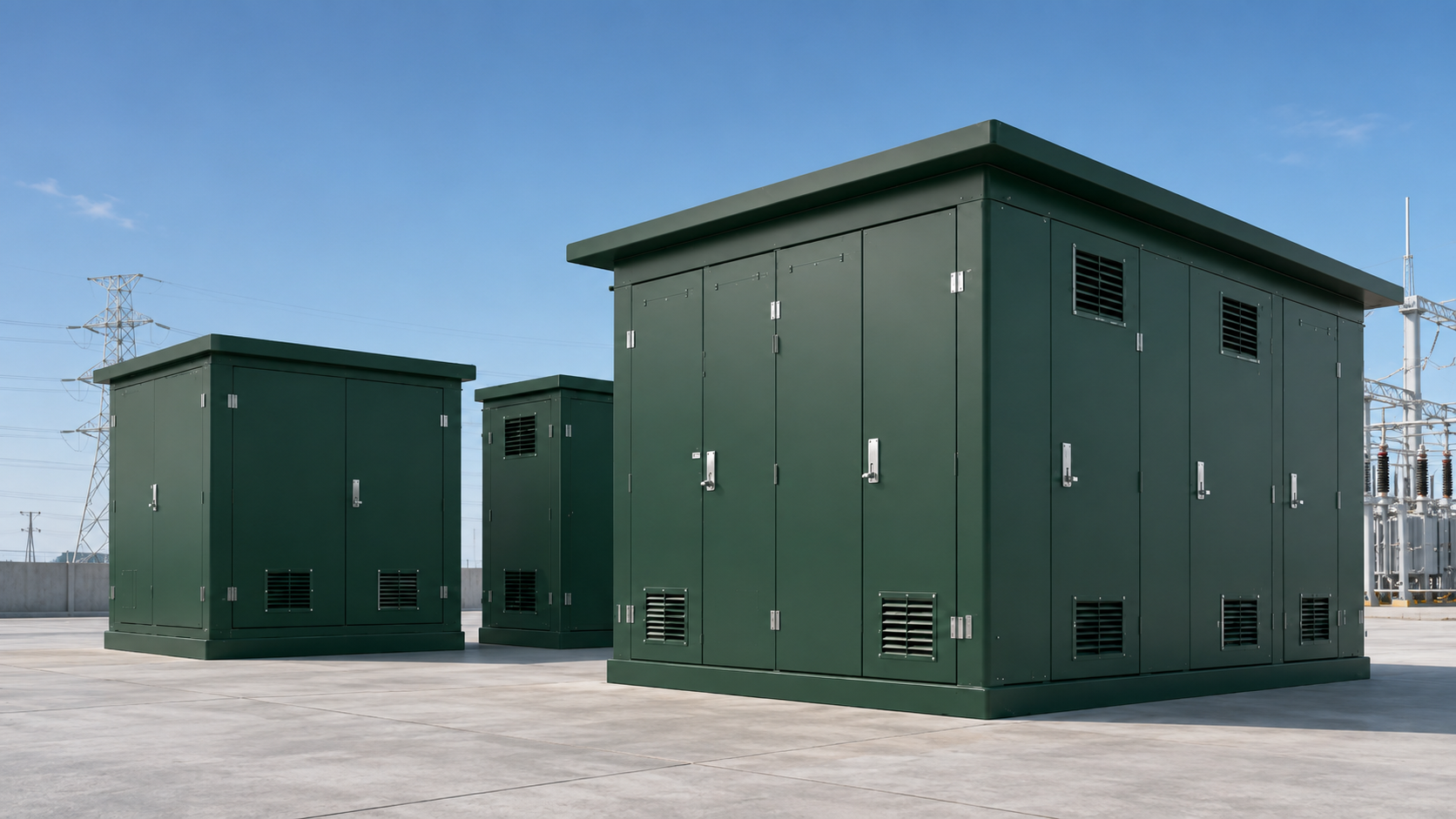
Table of Contents
1. Overview of YB Series Prefabricated Box Substation
2. Standard Capacity Configuration Scheme for YB Series Box Substation
3. Classification and Advantages of Mainstream Insulation Modes
4. Functional Composition of Intelligent Monitoring System
5. Performance Comparison of Different Configuration Schemes
6. Typical Engineering Application Scenarios
7. Industry FAQ
1. Overview of YB Series Prefabricated Box Substation
The YB series box substation is a mainstream integrated prefabricated substation widely used in urban and industrial power distribution systems.
Different from traditional on-site assembled substations, this prefabricated substation completes internal wiring and debugging in the factory.
It features compact structure, fast installation and strong environmental adaptability. It can adapt to outdoor harsh working conditions.
Reasonable capacity configuration, reliable insulation mode and complete intelligent monitoring are the three core points of YB box substation selection.
2. Standard Capacity Configuration Scheme for YB Series Box Substation
Capacity configuration directly determines the power supply load range and operation stability of prefabricated substation.
Blindly increasing or reducing capacity will lead to energy waste or overload tripping failure.
2.1 Common Capacity Specification Range
The conventional capacity of YB series box substation covers 315kVA to 2500kVA, which meets most civil and industrial power demands.
Small-capacity models are used for residential communities, while large-capacity products adapt to factory parks and new energy projects.
2.2 Capacity Selection Principles
Designers need to calculate the peak load of the power consumption terminal first. Reserve 10% to 15% redundant capacity for later load expansion.
This configuration method effectively avoids long-term overload operation of the prefabricated substation.
3. Classification and Advantages of Mainstream Insulation Modes
Insulation mode is a key factor in safe operation of YB series prefabricated substation, which affects equipment durability and lightning protection performance.
At present, industrial mainstream insulation modes are divided into air insulation and composite solid insulation.
3.1 Air Insulation Structure
Air insulation relies on natural air gap to realize electrical isolation. It has simple structure and low maintenance cost.
This insulation mode is suitable for conventional urban power distribution projects with stable environment.
3.2 Composite Solid Insulation Structure
Solid insulation uses epoxy resin integral pouring, with higher insulation strength and smaller volume occupation.
It can resist humid, dusty and high-altitude environments, suitable for complex outdoor engineering scenarios.
4. Functional Composition of Intelligent Monitoring System
Modern YB series prefabricated substation is no longer a simple power distribution equipment. Intelligent monitoring system realize full-cycle operation management.
The system integrates real-time data collection, fault alarm, temperature and humidity monitoring and remote transmission functions.
It can monitor operating current, voltage, equipment temperature and box body environment 24 hours a day.
Once overload, short circuit or over temperature occurs, the system will trigger automatic alarm to avoid equipment burnout and power failure accidents.
5. Performance Comparison of Different Configuration Schemes
The following data is sorted according to IEC power distribution equipment standards, intuitively reflecting the performance differences of different configurations of YB prefabricated substation.
Configuration Type | Applicable Capacity | Insulation Mode | Intelligent Monitoring Level | Service Life | Applicable Scenarios |
Standard Type | 315-800kVA | Air Insulation | Basic Data Monitoring | 15 Years | Residential Area, Commercial Street |
Enhanced Type | 1000-1600kVA | Hybrid Insulation | Full Function Monitoring | 20 Years | Industrial Park, Construction Site |
High-End Type | 2000-2500kVA | Solid Insulation | Cloud Remote Monitoring | 25 Years | New Energy, High-Altitude Area |
High-capacity prefabricated substation must match solid insulation and high-level intelligent monitoring to ensure operational safety.
6. Typical Engineering Application Scenarios
YB series box substation has extremely high engineering application flexibility, covering civilian, industrial and new energy fields.
In photovoltaic power station projects, high-capacity solid insulation models are widely used to adapt to outdoor variable environments.
In urban community renovation projects, standard air insulation prefabricated substations effectively reduce construction cycle.
With the support of intelligent monitoring system, the later operation and maintenance cost of the equipment is reduced by more than 40%.
7. Industry FAQ
Q1: What is the core basis for capacity configuration of YB series box substation?
A1: It is mainly determined by the peak power load of the project. It is necessary to reserve 10%-15% redundant capacity to adapt to future power load growth.
Q2: Which insulation mode is better for outdoor prefabricated substation?
A2: Ordinary urban areas can choose air insulation. Humid, dusty and high-altitude outdoor environments priority use solid insulation structure.
Q3: What is the main function of the intelligent monitoring system of prefabricated substation?
A3: It realizes 24-hour real-time monitoring of power data and equipment status, automatically alarms faults, and supports remote operation and maintenance management.
Q4: What are the advantages of YB series prefabricated substation compared with traditional substation?
A4: It has factory integrated production, shorter construction period, smaller floor area, and supports intelligent operation and maintenance, which is more suitable for modern power engineering.