
June 4, 2026
How Prefabricated Substations Shorten Data Center Power Deployment Cycles: Engineering Practice of Modular Integrated Design
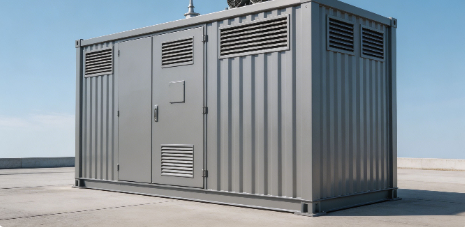
Table of Contents
1. Bottlenecks of Traditional Power Construction for Data Centers
2. Core Advantages of Prefabricated Substation Modular Integration
3. Deployment Cycle Data Comparison: Traditional vs Prefabricated Scheme
4. Rapid Deployment Logic of Modular Substation for Power Supply
5. Standard Implementation Process of Professional Substation Manufacturers
6. Practical Value for Data Center Power Supply Projects
7. Industry FAQ
1. Bottlenecks of Traditional Power Construction for Data Centers
Data center power supply need high reliability and fast delivery speed in modern digital construction.
Traditional on-site substation construction take long time. It rely heavily on on-site welding, wiring and equipment assembly.
Multiple construction teams work crossly on site. It cause schedule delays and quality inconsistency.
Most large data center projects face construction cycle pressure. Slow power deployment delay overall project launch.
Traditional discrete construction mode cannot fit the fast iteration needs of modern data center power supply.
2. Core Advantages of Prefabricated Substation Modular Integration
Modular integration is the core technical feature of modern prefabricated substation.
All power equipment, wiring and control systems are integrated in the factory in advance.
The whole substation is divided into standard modular units. Each unit complete internal debugging before delivery.
This factory prefabrication mode change the traditional on-site construction logic completely.
It lay a solid foundation for rapid deployment of data center power supply systems.
2.1 Integrated Structure Optimization
Prefabricated substation integrate high-voltage units, low-voltage units and protection devices as a whole.
No scattered parts and complicated on-site assembly steps. The overall structure is compact and standardized.
2.2 Standardized Factory Debugging
Professional substation manufacturers complete full performance testing in factory.
On-site work only need positioning, fixing and simple connection. It save huge debugging time.
3. Deployment Cycle Data Comparison: Traditional vs Prefabricated Scheme
The difference between traditional construction and modular prefabricated scheme is obvious in actual engineering projects.
The following data come from IEEE data center power infrastructure construction statistics, which reflect real project cycle differences.
Construction Mode | Factory Pre-production Cycle | On-site Construction Cycle | Overall Project Cycle | On-site Labor Input |
Traditional On-site Construction | 15 Days | 68 Days | 83 Days | 100% (Benchmark) |
Modular Prefabricated Substation | 28 Days | 12 Days | 40 Days | 35% |
Prefabricated substation cut the total deployment cycle by 51.8% compared with traditional mode.
On-site construction time is compressed greatly. It avoid weather and human factors interference effectively.
Modular integration transfer most work to factory, which stable the project progress.
4. Rapid Deployment Logic of Modular Substation for Power Supply
Rapid deployment not only mean fast installation. It cover full-cycle efficiency upgrade.
All modular units adopt unified interface standards. It support quick docking and assembly.
Data center power supply have strict requirements on power continuity. Prefabricated design reduce on-site error risk.
Factory integrated debugging ensure every module match the overall power system parameters.
The whole power system can be put into operation in a short time after on-site installation.
5. Standard Implementation Process of Professional Substation Manufacturers
Formal substation manufacturers follow fixed standardized process for data center supporting projects.
First, confirm data center load parameters and power supply layout scheme.
Second, complete modular segmentation, equipment integration and internal wiring in factory.
Third, finish insulation test, power-on test and system linkage debugging.
Last, deliver integral modules to site for quick installation and final acceptance.
This standardized process ensure both construction speed and power supply stability.
6. Practical Value for Data Center Power Supply Projects
Digital economy development raise higher demands for data center construction speed.
Prefabricated substation solve the long-cycle pain point of traditional power infrastructure.
Modular integration reduce on-site construction pollution and safety hazards.
Fast deployment help data centers complete capacity expansion and put into operation quickly.
It improve the overall investment return efficiency of digital infrastructure projects.
7. Industry FAQ
Q1: Why prefabricated substation can greatly shorten data center power deployment cycle?
A1: It adopt modular integration design. Most assembly and debugging work finish in factory. On-site construction steps reduce greatly. It realize rapid deployment and avoid various delays of traditional on-site construction.
Q2: Is modular prefabricated power supply system less stable than traditional one?
A2: No. Professional substation manufacturers complete repeated debugging and testing in factory. The integrated structure have better sealing and stability. It fully meet the high reliability needs of data center power supply.
Q3: What project scenarios are suitable for prefabricated substation application?
A3: It fit for new data center construction, rapid capacity expansion, temporary power support and short-cycle infrastructure projects. It has irreplaceable advantages in time-sensitive engineering projects.