
September 18, 2026
GGD Cabinet Innovations: Smart Temperature Control and Modular Assembly
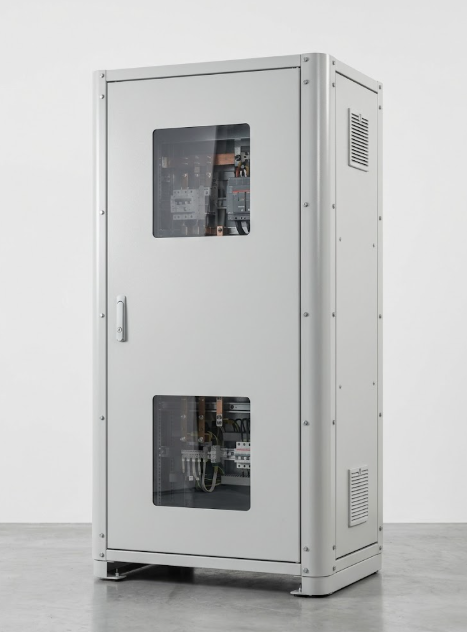
Table of Contents
Introduction: The Evolution of GGD Low-Voltage Switchgear
Smart Temperature Control: From Passive Cooling to Active Thermal Management
Modular Assembly: Rethinking Cabinet Construction
Enhanced Safety and User Experience
Compliance and Standards
Frequently Asked Questions (FAQ)
1. Introduction: The Evolution of GGD Low-Voltage Switchgear
The GGD low-voltage distribution cabinet has been a cornerstone of power distribution since its development in 1991. Designed for fixed installation in power plants, substations, and industrial facilities, the GGD cabinet meets IEC 439 and GB7251 standards and holds national 3C certification . However, early designs presented challenges: complex installation, poor sealing, component distortion, and difficult maintenance .
Two major innovation directions are now reshaping the GGD cabinet: smart temperature control and modular assembly. These advancements address the original design limitations while meeting modern demands for energy efficiency, flexibility, and reliability.
2. Smart Temperature Control: From Passive Cooling to Active Thermal Management
Temperature management in electrical enclosures is critical. Overheating degrades component life, increases failure risk, and compromises system reliability.
Traditional Approaches
Earlier GGD designs relied primarily on passive ventilation—louvered openings on the cabinet's upper, lower, and front sides to allow natural air circulation . While simple and cost-effective, passive cooling has significant limitations: it offers no active response to temperature changes, provides limited protection against dust ingress, and cannot adapt to varying load conditions.
Active Temperature Control Systems
Modern smart temperature control systems use sensors and microcontrollers to actively manage internal cabinet temperatures. A temperature sensor continuously monitors conditions, and the control system can activate cooling equipment or transmit alerts when thresholds are exceeded .
Key capabilities include:
Real-time monitoring: Continuous temperature measurement for early warning
Automated response: Fans or cooling systems activate when setpoints are reached
Remote alerting: SMS or network notifications for abnormal temperature rises
Data logging: Temperature history for predictive maintenance
Integration with Smart Infrastructure
ABB's smart temperature control products, for example, now support integration with home and building automation systems via Bluetooth and wireless protocols . One degree of temperature reduction can save approximately 6% of heating energy . While residential applications differ from industrial switchgear, the underlying principle—active, intelligent temperature management—is directly transferable to GGD cabinets.
3. Modular Assembly: Rethinking Cabinet Construction
The second major innovation area is modular assembly, which addresses the structural and assembly inefficiencies of traditional GGD cabinets.
From Welded to Bolted Construction
Traditional GGD cabinets rely heavily on welding during assembly—a process that introduces distortion, increases production time, and complicates maintenance . The full assembly-type GGD design replaces welding with bolted connections using standardized components .
Key improvements:
Standardized profiles: Vertical supports, intermediate studs, base cross-members, and upper beams use identical profile sections
Location plates: L-shaped connectors and set squares at joint faces ensure accurate alignment
Bolted connections: Replace welding, reducing distortion and simplifying assembly
Design for Disassembly
Modular assembly is not just about construction—it is about maintenance and flexibility. Components can be inspected, replaced, or upgraded without dismantling the entire cabinet. This approach reduces downtime and extends cabinet service life .
Patent innovations include:
Quick-connect mechanisms: Connectors with inclined-plane guiding for easy opening and closing
Locking springs: Ensure reliable locking after repeated openings
Dual clamping blocks: Prevent distortion from one-sided stress
Flexibility and Ergonomics
Modular assembly principles, as demonstrated in automotive manufacturing by Audi's modular assembly pilots, allow production stations to be "de-linked" for greater flexibility . While Audi applies this to vehicle assembly, the principle—breaking dependency between stations to enable independent modifications—is equally relevant to cabinet assembly. "By de-linking them through modular assembly, we can make changes much more easily and precisely," notes project manager Wolfgang Kern .
Benefits include:
Easier integration of new product variants
Individual workspace adaptation for ergonomics
Simpler training and qualification requirements
4. Enhanced Safety and User Experience
Safety improvements have accompanied the shift to modular assembly and smart control.
Protective Barriers
A key safety innovation is the addition of protective plates between copper busbars and the cabinet door . When the door is open for maintenance, operators remain isolated from live components. The protective plates also increase overall cabinet structural strength .
Design features:
Openable connections: Allow easy access while maintaining protection
Transparent materials: Enable visual inspection without removing panels
Insulating properties: Provide electrical isolation even if deformed
Improved Visibility
Transparent upper and lower windows on the cabinet front door allow operators to monitor switch positions and indicator status without opening the door . Hinge-mounted transparent windows offer easier access than earlier designs requiring bolt removal .
5. Compliance and Standards
GGD cabinets must comply with relevant international standards to ensure safety and interoperability.
Applicable standards:
IEC 60947-1: General rules for low-voltage switchgear and controlgear (rated up to 1000 V AC or 1500 V DC)
GB7251: Chinese national standard for low-voltage switchgear
IEC 439: Low-voltage switchgear and controlgear assemblies
National 3C certification: Mandatory for products sold in China
IEEE C37.20.1-2026: Draft standard for metal-enclosed low-voltage power circuit breaker switchgear
The IEEE standard covers rated voltages up to 1000 V AC and 3200 V DC, with bus current ratings reaching 10,000 A . GGD cabinets designed to meet these standards ensure compatibility across international markets.
6. Frequently Asked Questions (FAQ)
Q: What does GGD stand for?
A: GGD stands for: G – Low-voltage distribution cabinet; G – Fixed installation, link; D – Electric power cabinet .
Q: What are the main advantages of modular assembly over traditional welded construction?
A: Modular assembly reduces distortion, simplifies maintenance, enables component replacement without full disassembly, and allows easier customization and upgrades .
Q: How does smart temperature control improve cabinet reliability?
A: Smart temperature control provides real-time monitoring and automated response to abnormal conditions, preventing overheating and enabling proactive maintenance .
Q: What safety features are being added to GGD cabinets?
A: New designs include protective plates between busbars and doors, transparent windows for visual inspection without opening, and improved insulation materials .
Q: Are GGD cabinets certified for international markets?
A: Yes. GGD cabinets meet IEC, GB, and IEEE standards. The IEEE C37.20.1 standard covers low-voltage switchgear up to 1000 V AC and 3200 V DC .