
October 14, 2026
Compact Substation Global Market Expands Fast As Renewable Energy And Urban Grid Projects Rise
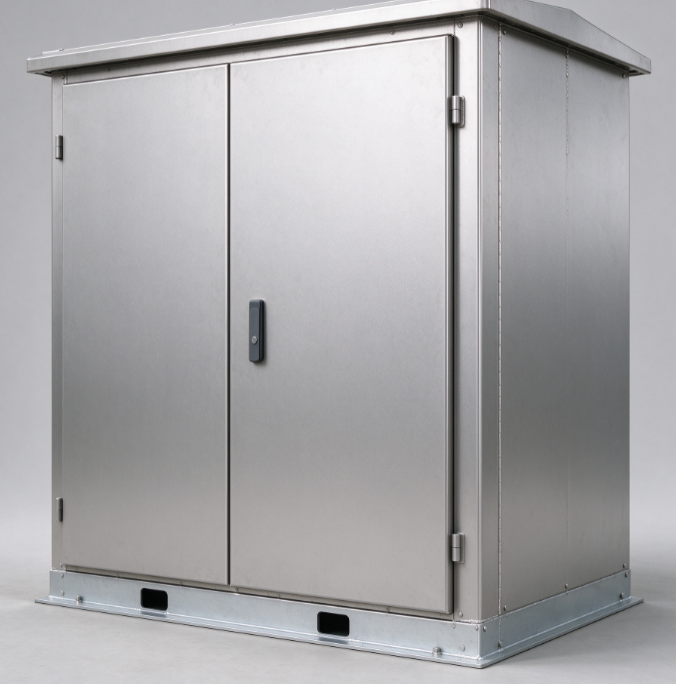
Table of Contents
1. Current Global Market Overview for Compact Substation
2. Key Driving Factors Behind Rising Compact Substation Demand
3. Regional Market Breakdown and Deployment Status
4. Core Technical Advantages of Modern Compact Substation Solutions
5. New Industry Trends Shaping Compact Substation Development
6. Existing Market Challenges for Global Buyers and Installers
7. Frequently Asked Questions
1. Current Global Market Overview for Compact Substation
The worldwide compact substation industry keeps strong upward momentum in 2026. Latest aggregated global industry data shows the global compact substation market reached USD 19.7 billion in 2025, and it is expected to hit USD 34.2 billion by 2034, registering a compound annual growth rate (CAGR) of 7.1% across the forecast period from 2026 to 2034.
Compact substation, also known as prefabricated or packaged substation, integrates high voltage switchgear, power transformer, low voltage distribution panels and control components inside one single sealed enclosure. Unlike conventional on site built substations, all core equipment is fully assembled, wired and tested inside the factory before shipment.
Utilities, renewable energy developers, industrial park operators and urban construction departments are the largest buyer groups globally. The utility sector alone accounts for nearly 45 % of total compact substation application volume worldwide, followed by industrial and commercial power supply projects. Medium voltage products covering the 11 kV 33 kV range remain the most widely selected specification, capturing over 65 % market share in 2025 global shipments.
2. Key Driving Factors Behind Rising Compact Substation Demand
Multiple global energy shifts are pushing project owners to choose compact substation over traditional built on site power facilities.
First, rapid urbanisation creates serious land shortage problems in dense city centres. A compact substation cuts required ground footprint by roughly 60 % compared with equivalent capacity traditional substations, making it suitable for downtown districts where land costs are very high. Construction timelines also drop dramatically. While a conventional substation often takes 18 24 months to finish, on site installation work for a factory built compact substation can be completed within 3 10 days, greatly reducing civil engineering investment and weather related construction delays.
Second, global renewable energy expansion fuels massive compact substation purchases. Solar farms, on shore wind parks, battery energy storage stations and large EV charging hubs all need fast deployed distribution nodes to connect clean power into main grids. More than 41 % of newly ordered compact substations in recent years support renewable grid interconnection work across all continents.
Third, grid modernisation programmes in North America, Europe and Oceania drive replacement of ageing distribution infrastructure. Modern compact substation units can be fitted with IoT sensors, remote monitoring modules and automated fault protection functions, perfectly matching smart grid upgrade targets set by national energy regulators.
3. Regional Market Breakdown and Deployment Status
Asia Pacific currently holds the largest regional compact substation market share, reaching approximately 42.6 % of global revenue in 2025. Fast growing metropolitan zones in India, Southeast Asia and East Asian industrial zones continuously add new orders. Ongoing large scale infrastructure projects under national urban renewal schemes support steady regional demand growth at a CAGR of about 6.2 % until 2033.
Europe maintains stable compact substation deployment, driven by renewable energy transition policies, smart city projects and the retrofitting of old urban power networks. Several major European equipment manufacturers have expanded local production capacity for climate resilient compact substation units for high humidity and cold climate locations.
North American market growth comes mainly from utility grid upgrades, commercial district electrification and solar plus storage projects. Many local power companies now include compact substation solutions as their preferred option for new suburban area distribution points.
The Middle East and Africa region shows promising long term potential. Large urban development visions, desert based solar projects and cross city power transmission expansion plans are opening up new procurement opportunities for heat resistant compact substation designs built for extreme high temperature environments. Latin American demand is also climbing, as governments speed up rural electrification and industrial zone construction.
4. Core Technical Advantages of Modern Compact Substation Solutions
When project managers compare compact substation against traditional substation builds, four practical benefits usually stand out:
· Space saving: All functional parts fit inside one compact enclosure. No separate buildings are needed for high voltage, transformer and low voltage sections.
· Controlled factory quality: Full assembly, wiring and high voltage testing are completed under stable workshop conditions, lowering on site installation errors.
· Cost predictability: Most project costs are locked in at the factory production stage, avoiding unexpected overruns from civil work delays and on site labour problems.
· Flexible deployment: Outdoor pad mounted, semi underground and indoor installation options are available. Modified compact substation units can operate reliably in coastal salt spray, desert dust and high altitude locations.
5. New Industry Trends Shaping Compact Substation Development
Digital upgrade features represent the clearest trend for new generation compact substation products worldwide. Top electrical brands are adding IoT monitoring hardware and digital twin support to their product portfolios. With real time data collected from temperature, current and partial discharge sensors, maintenance teams can carry out predictive inspections and cut unplanned power failure risks.
SF6 free, eco friendly insulation technology is gaining traction. Many European and North American utility buyers now prefer compact substation designs using low global warming potential insulation gas or solid insulation materials, to meet stricter carbon emission rules for electrical equipment.
Modular scalable architecture is another fast growing direction. Instead of purchasing one fixed capacity compact substation from the beginning, industrial clients can start with a smaller base unit and add transformer or switchgear modules later when power load requirements rise. This “pay as you grow” strategy helps enterprises optimise long term capital spending on power infrastructure.
Recent global product launches confirm these shifts. In 2024, one leading global electrical supplier rolled out an eco friendly modular compact substation specially optimised for urban renewable energy connection work. Another well known brand formed a regional partnership in Southeast Asia, developing tropical climate adapted compact substation hardware for local solar energy developers.
6. Existing Market Challenges for Global Buyers and Installers
Despite bright market prospects, the compact substation sector still faces notable obstacles.
Regional electrical standard differences create extra costs for international suppliers. Voltage ratings, safety testing rules and outdoor enclosure protection requirements vary widely between continents. Exporters must carry out custom re design work to get local certification approval.
Harsh environment reliability remains a technical concern. Compact substation units deployed in very hot desert zones, high humidity coastal areas or cold mountain locations need upgraded anti corrosion, temperature control and sealing systems, which pushes up total equipment investment.
Supply chain lead time fluctuations also affect project schedules. Key electronic monitoring components and specialised transformer raw material shortages can delay compact substation delivery dates for large volume orders.
7. Frequently Asked Questions
Q1: What is the typical service life for a compact substation?
Well maintained compact substation equipment usually delivers 20 30 years of operational life. Service life depends on enclosure material quality, local environmental conditions and routine maintenance frequency.
Q2: Can compact substation work for large scale solar power plants?
Yes. Multiple compact substation units can be deployed across solar farm sites to collect power generated by different solar panel blocks before sending electricity to the main transmission grid.
Q3: What voltage ranges are most common for compact substation products?
Most global compact substation orders fall inside the medium voltage bracket, with primary side ratings between 11 kV and 33 kV. Low voltage focused compact substation variants are widely used inside residential compounds and commercial zones.
Q4: How much site preparation work is needed before compact substation delivery?
Only a flat, solid concrete foundation is generally required. No complicated multi building civil construction is necessary, greatly cutting site work complexity.