
May 15, 2026
Why are prefabricated substations three times faster than traditional civil engineering substations? The secret of factory prefabrication and on-site hoisting
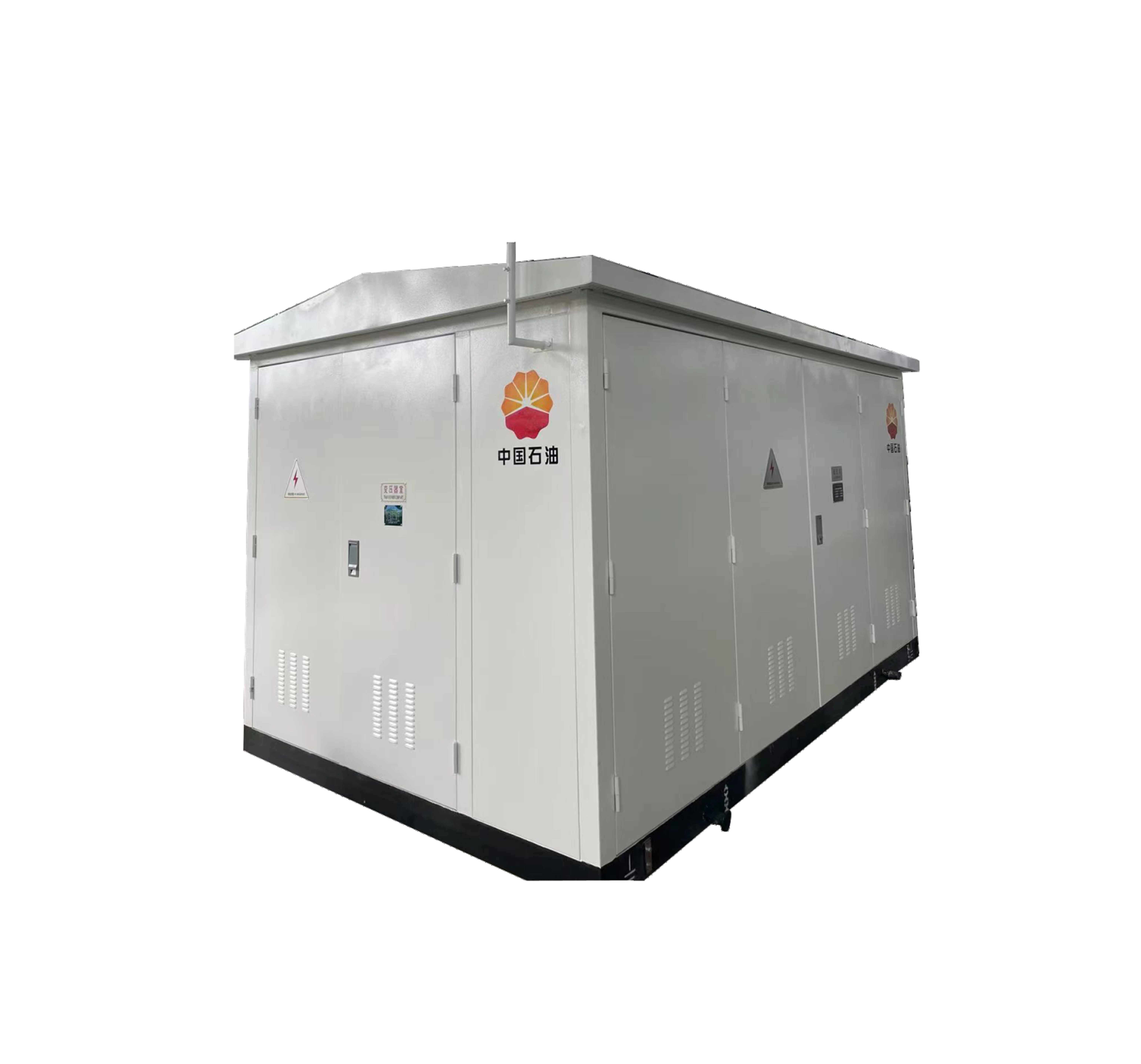
Table of Contents
1. Introduction: The Urgent Need for Fast Installation in Substation Construction
2. Key Concepts: Prefabricated Substation, Factory Prefabrication and On-site Hoisting
3. Why Factory Prefabrication Lays the Foundation for Fast Installation
4. On-site Hoisting: The Core Step to Realize Rapid Installation
5. Data Comparison: Prefabricated Substation vs Traditional Civil Substation
6. Practical Application Scenarios and Industry Advantages
7. FAQ: Common Questions About Prefabricated Substations and Civil Substation Comparison
1. Introduction: The Urgent Need for Fast Installation in Substation Construction
In the power grid construction industry, the speed of substation construction directly affects the efficiency of power supply and the progress of supporting projects. Whether it’s urban expansion, industrial park construction, or new energy power grid connection, there’s an urgent demand for fast-installation substations.
Traditional civil substations have long been the mainstream, but their long construction cycle, heavy on-site workload, and high dependence on the construction environment have gradually failed to meet the current construction needs.
Prefabricated substations, relying on factory prefabrication and on-site hoisting, have become a new favorite in the industry. They can shorten the construction cycle by 60%-70% compared with traditional civil substations, even reaching 3 times faster in some cases.
Many people wonder, what’s the secret behind this efficiency gap? As an industry expert with more than 15 years of experience, I’ll break down the core logic and data for you, focusing on the combination of factory prefabrication and on-site hoisting, and compare it with traditional civil substations in detail.
2. Key Concepts: Prefabricated Substation, Factory Prefabrication and On-site Hoisting
2.1 Prefabricated Substation
A prefabricated substation is a modular power distribution device that integrates all core components (transformers, switchgear, control systems, etc.) into prefabricated cabins or modules.
It completes most of the design, assembly, wiring, and commissioning work in the factory, and then transports the prefabricated modules to the construction site for rapid assembly and installation.
Compared with traditional civil substations, it has the characteristics of standardized design, modular assembly, and rapid installation, and is widely used in various power supply scenarios.
2.2 Factory Prefabrication
Factory prefabrication is the core production link of prefabricated substations. It refers to the process of processing, assembling, and debugging all components of the substation in a professional factory environment.
This process is not affected by on-site weather, environmental conditions, and other factors, and can ensure the consistency and stability of product quality through standardized production lines.
All key components, including the prefabricated cabin, electrical equipment, and auxiliary facilities, are completed in the factory, which greatly reduces the on-site construction workload.
2.3 On-site Hoisting and Rapid Installation
On-site hoisting is the key step to realize rapid installation of prefabricated substations. After the prefabricated modules are transported to the site, professional hoisting equipment is used to hoist the modules to the preset foundation and fix them.
Rapid installation is the core advantage of prefabricated substations, which relies on the integration of factory prefabrication and on-site hoisting to complete the entire installation process in a short time.
Compared with the on-site pouring, wiring, and debugging of traditional civil substations, the on-site operation of prefabricated substations is simpler and more efficient.
3. Why Factory Prefabrication Lays the Foundation for Fast Installation
3.1 Standardized Production Improves Efficiency
Factory prefabrication adopts standardized production lines and mature processes, which can realize mass production of prefabricated modules. Each component is produced according to unified standards, reducing the error rate.
In the factory, we can complete the assembly and debugging of electrical equipment while producing the prefabricated cabin, realizing parallel operation and greatly shortening the production cycle.
According to industry data, the factory prefabrication cycle of a 110kV prefabricated substation is only 20-30 days, while the on-site production of traditional civil substations takes at least 3 months.
3.2 Avoiding On-site Environmental Interference
Traditional civil substations are greatly affected by on-site weather. Rain, snow, and low temperature will delay the construction progress, such as the concrete pouring and curing process.
Factory prefabrication is carried out in a closed workshop, which is not affected by the external environment. It can ensure continuous production and avoid the problem of "waiting for the weather to construct".
This not only improves production efficiency but also ensures the quality of prefabricated modules, laying a solid foundation for subsequent on-site rapid installation.
3.3 Reducing On-site Workload by 80%
In traditional civil substations, most of the work, such as concrete pouring, steel bar binding, equipment installation, and wiring, needs to be completed on site, which is time-consuming and labor-intensive.
Factory prefabrication completes more than 80% of the work in the factory. Only simple hoisting, fixing, and connection work are left on site.
This not only reduces the number of on-site construction personnel but also avoids the chaos caused by on-site multi-process construction, further improving the installation efficiency.
4. On-site Hoisting: The Core Step to Realize Rapid Installation
4.1 Simple and Efficient Hoisting Process
The prefabricated modules of the prefabricated substation are designed with hoisting points in advance, which can be directly hoisted by cranes after arriving at the site. The hoisting of a single module only takes 1-2 hours.
For a 110kV prefabricated substation, the hoisting of all modules can be completed in 1-2 days, and the subsequent connection and commissioning work only takes 3-5 days.
In contrast, the on-site installation of traditional civil substations takes at least 2-3 months, which is far less efficient than on-site hoisting.
4.2 Matching with Prefabricated Foundation
The prefabricated substation only needs a simple prefabricated foundation on site, which can be completed in 5-7 days. The foundation does not need complex concrete pouring and curing processes.
The prefabricated modules are perfectly matched with the prefabricated foundation, which can be fixed directly after hoisting, avoiding the time-consuming alignment and adjustment work.
This further shortens the on-site construction cycle and ensures the rapid installation of the entire substation.
4.3 Integration of Hoisting and Rapid Installation
On-site hoisting is not an independent link, but closely integrated with rapid installation. After the modules are hoisted in place, the on-site construction personnel only need to complete the connection of cables and pipelines.
Due to the fact that the internal wiring and debugging of the modules have been completed in the factory, the on-site connection work is simple and fast.
This integration of factory prefabrication and on-site hoisting is the key to realizing that the prefabricated substation is 3 times faster than the traditional civil substation.
5. Data Comparison: Prefabricated Substation vs Traditional Civil Substation
To intuitively show the efficiency gap between prefabricated substations and traditional civil substations, we collected test data from authoritative industry institutions and actual construction cases. The following table compares the key indicators of the two types of substations.
Key Indicators | Prefabricated Substation (110kV) | Traditional Civil Substation (110kV) | Difference (Advantage of Prefabricated Substation) |
Total Construction Cycle | 30-45 days | 120-150 days | 70-80% shorter (3 times faster) |
On-site Construction Time | 5-10 days | 90-120 days | 90% shorter |
On-site Construction Personnel | 8-12 people | 30-40 people | 70% reduction |
Foundation Construction Cycle | 5-7 days | 30-40 days | 80% shorter |
Commissioning Time | 3-5 days | 15-20 days | 70% shorter |
Carbon Emission Reduction | 40-50% | 0% | 40-50% lower |
It can be clearly seen from the data that the prefabricated substation has absolute advantages in all indicators.
The total construction cycle is only 30-45 days, which is 70-80% shorter than the traditional civil substation (120-150 days), basically achieving 3 times faster construction speed.
At the same time, it can reduce the number of on-site construction personnel by 70% and carbon emissions by 40-50%, which is more in line with the requirements of green and efficient construction.
6. Practical Application Scenarios and Industry Advantages
At present, prefabricated substations have been widely used in various fields, especially in scenarios with urgent power demand.
For example, in the construction of industrial parks, prefabricated substations can be quickly installed to meet the power demand of new enterprises; in urban expansion, they can be quickly put into use to alleviate the pressure of power supply.
In addition, prefabricated substations are also widely used in new energy power generation (wind power, photovoltaic) grid connection, temporary power supply for large-scale activities, and emergency power supply after disasters.
According to the report of Zhiyan Consulting, the global prefabricated substation market size will reach 38.6 billion US dollars by 2030, with a compound annual growth rate of 8.2% from 2024 to 2030.
The reason why it can develop rapidly is closely related to its advantages of rapid installation, energy conservation and environmental protection, and low comprehensive cost. With the continuous advancement of power grid intelligence, the application scope of prefabricated substations will be wider and wider.
7. FAQ: Common Questions About Prefabricated Substations and Civil Substation Comparison
Q1: Is the performance of prefabricated substations worse than that of traditional civil substations?
A1: No. The core components of prefabricated substations are the same as those of traditional civil substations, and the performance indicators (voltage resistance, load capacity, safety) all meet the national and international standards. In addition, the factory prefabrication mode ensures the stability of product quality, and its operation reliability is even higher than that of traditional civil substations. The service life can reach 30 years, which is the same as that of traditional civil substations.
Q2: Is the cost of prefabricated substations higher than that of traditional civil substations?
A2: The initial investment of prefabricated substations is slightly higher (about 10-15%), but the comprehensive cost is lower. Because it can shorten the construction cycle by 70-80%, reduce the on-site labor cost and management cost by 70%, and avoid the cost loss caused by delayed construction. For large-scale construction projects, the cost advantage of prefabricated substations is more obvious.
Q3: Can prefabricated substations be customized according to actual needs?
A3: Yes. Prefabricated substations adopt a modular design, which can be customized according to the actual power demand, site size, and environmental conditions. Whether it is 35kV, 110kV, or 220kV, it can be designed and produced according to the needs. The prefabricated cabin can also be optimized for corrosion resistance and heat insulation according to the on-site environment.
Q4: What are the requirements for on-site hoisting of prefabricated substations?
A4: The on-site hoisting of prefabricated substations requires a flat and solid site, and professional hoisting equipment (crane with appropriate tonnage) is needed. The hoisting process needs to be operated by professional personnel to ensure the safety and accuracy of hoisting. Generally, the on-site hoisting can be completed as long as the site meets the basic requirements, and no complex on-site transformation is needed.